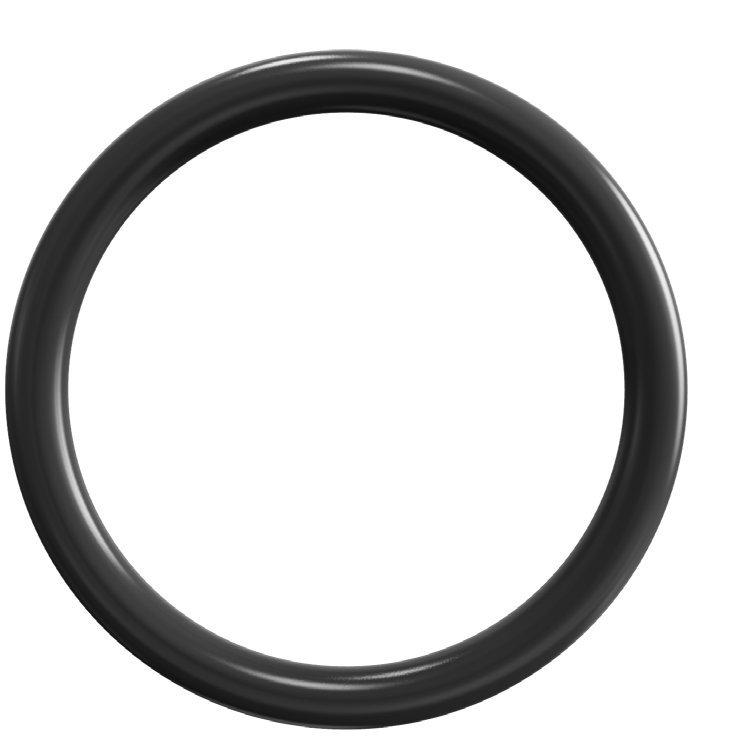
When an FKM or HNBR seal is no longer enough, engineers turn to FFKM — the perfluoroelastomer family best known through DuPont’s Kalrez® brand. Combining near-PTFE chemical resistance with rubber elasticity and continuous service up to 280–320 °C, FFKM has become the default sealing material for the harshest oilfield and refinery duties. This article looks at where FFKM actually earns its keep in petroleum service, with three typical application cases.
What Is FFKM?
FFKM (perfluoroelastomer, ASTM D1418) is a fully fluorinated rubber in which nearly all C–H bonds of a conventional elastomer are replaced by C–F bonds. The result is a material that resists virtually every chemical found in oil and gas production — sour gas, amines, methanol, steam, hot water, aromatics and acids — while still sealing like an elastomer. “Kalrez®” is DuPont’s registered trademark for its FFKM compounds; several manufacturers, including AOBO, produce equivalent FFKM O-rings and custom parts to the same material class.
Why Petroleum Service Is So Hard on Seals
Downhole and process environments combine stresses that destroy ordinary elastomers one by one:
- Sour gas (H₂S) and CO₂ at high partial pressure, causing chemical attack and explosive decompression (RGD) damage
- High pressure, high temperature (HPHT) — wells beyond 150 °C and 69 MPa are now routine
- Amines and corrosion inhibitors used in gas sweetening and well treatment
- Steam and hot water in SAGD/EOR injection wells
- Aromatics and methanol in stimulation and hydrate-control fluids
FFKM is one of the few elastomers that withstands all of these simultaneously.
Case 1: MWD / LWD Downhole Tools in HPHT Sour Wells
Measurement- and logging-while-drilling tools house sensitive electronics sealed behind O-rings that see drilling mud, sour gas and 150–200+ °C for weeks at a time. In one typical North Sea HPHT campaign, switching packer and connector seals from HNBR to an RGD-resistant FFKM grade eliminated the decompression blistering that had forced premature tool pull-outs, extending mean time between failures from days to months. FFKM’s low compression set at temperature keeps the seal energized over long runs where HNBR would relax and leak.
Case 2: Wellhead and Christmas Tree Valve Stem Seals
Valve stem and bonnet seals on wellheads and Christmas trees must hold sour hydrocarbons at full wellhead pressure for years of static service, then survive rapid pressure cycles during operation. FFKM O-rings and custom profiles are widely specified here because they resist H₂S/amine attack, meet NORSOK M-710 and API 6A requirements for sour service, and resist explosive decompression when the valve is depressurized. A gas field operator in the Middle East reported zero seal-related interventions across a five-year inspection cycle after upgrading critical stem seals from FKM to FFKM.
Case 3: Amine Units and Chemical Injection Pumps
Above ground, refinery amine treating units and methanol/chemical-injection skids are classic FFKM territory. Hot lean amine (MEA/DEA/MDEA) quickly hardens FKM, and methanol swells it. FFKM mechanical seal faces, pump O-rings and diaphragms run for years in these fluids without the swell, cracking or embrittlement seen in lesser elastomers — turning a quarterly seal-replacement chore into an annual inspection item.
FFKM vs FKM, HNBR and AFLAS — and How to Specify
FFKM is the premium choice, but not always the necessary one: HNBR covers many 120–150 °C sweet-service duties, AFLAS/FEPM excels in steam and amines at moderate cost, and FKM remains the economical default for hydrocarbons. Specify FFKM when two or more severe conditions combine — sour gas plus HPHT, amines plus temperature, or long static life with zero maintenance access. When ordering, state the fluid composition, temperature/pressure envelope, RGD exposure and required certifications (NORSOK M-710, ISO 23936, API 6A) so the correct FFKM grade and hardness can be selected.
AOBO manufactures FFKM O-rings (standard, high-temperature HT grades to 320 °C, and high-purity compounds), FFKM diaphragms and FFKM-to-metal bonded seals for oilfield equipment. Contact our engineering team with your service conditions for a material recommendation and quotation.